Ports
Doha Qatar New Port (NPP) Project -Doha
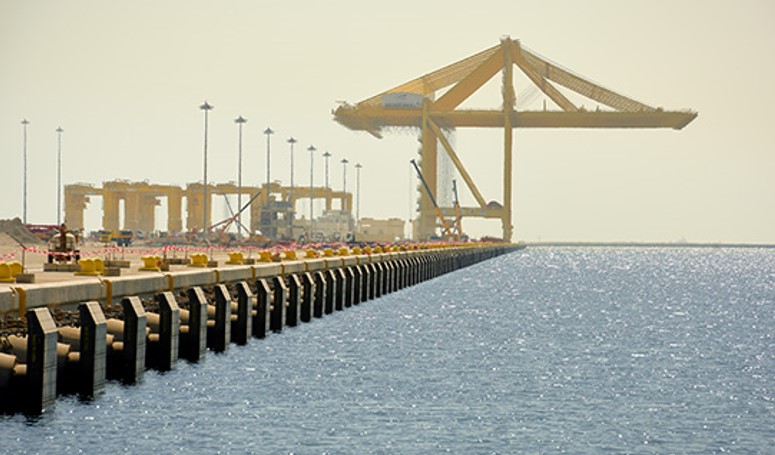
Project Name: Doha Qatar New Port (NPP) Project
Host Country: Qatar
Project Duration: January 2011- June 2015
The construction contract undertaken by the CHEC is Phase I of the project, with a contract amount of about 880 million US dollars consisting of 11 terminals, i.e. container terminals (number1 to 3), general cargo terminals, vehicle terminal yacht terminal, maritime terminal, coastguard terminal, offshore supply terminal, livestock terminal, and flour mill terminal. The main construction contents consist of the land dig-interior port basin excavation (70.7 million m3), construction of water-breaks and revetment (10km), construction of gravity block quay structure (8.1km), and land reclamation. The whole construction process adopts the method of dewatering. The construction commenced on January 24th, 2011, and completed on schedule on June 28th, 2015. There are six construction nodes in A-F, all of which were completed on schedule.
While Qatar is an important node of the maritime Silk Road in the Middle East, the Doha New Port Project, located on the coast of the Persian Gulf and in the southeast of Qatar, is the largest dig-interior port project in the history of human port construction.
As a superior milestone project in the field of economic cooperation opened by the Chinese and Qatari governments, the project is a critical project in the overall planning of Qatar's national infrastructure construction and one of the critical projects for hosting the 2022 Qatar world cup. The project is of great and far-reaching significance to the development of Qatar's economy and the improvement of Qatar's trade competitiveness with neighboring countries. After the completion of the project and as a modern port with a draft of 18 m and a port pool area of nearly 4 million m2, it will achieve a throughput capacity of 6 million TEUs / year, 1.7 million tons of groceries/year, one million tons of grain/year and 500,000 vehicles/year. As the largest port in Qatar at present, according to the assessment and expectations, the port can basically meet the port throughput demand required by the social and economic development of Qatar in the next 20-30 years.
In 2018, the project won the "Luban Award for China Construction Engineering".
Abidjan Port Expansion Project -Côte d'Ivoire
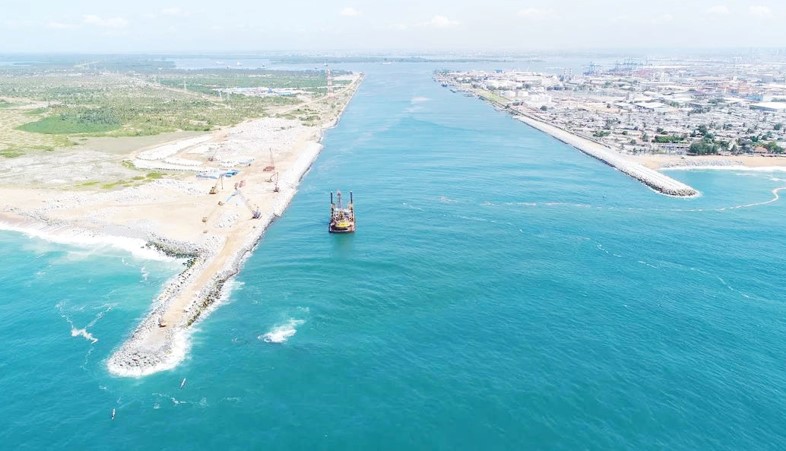
Project Name: Abidjan Port Expansion Project -Côte d'Ivoire
Host Country: Côte d'Ivoire
Project Duration: November 2015- April 2020
Project specification :
In the Abidjan Port Expansion Project, the construction process consists of a new container terminal with three berths in total. The total length of the quay coastline is 1312m, and the water depth of the terminal structure is - 18 m, forming a land area of 37.8 hectares, and a new roll ship terminal with two berths. The total length of the quay coastline is 500m and the structural water depth is - 16 meters, forming a land area of 19.1 hectares; widen and dredged deep sea area and the canal connecting with the open sea; demolish the old water-break and two new built waters-breaks with a length of 600m.
On December 27th, 2012, the CHEC signed an EPC commercial contract with the owner, Abidjan Port Authority. On December 17th, 2014, the CHEC signed a loan agreement with the China EXIM bank and on November 9th, 2015, the construction commenced officially.
Characteristics and Significance of the Project:
The Republic of C?te d’Ivoire is located in West Africa, bordered by Ghana in the East, the Gulf of Guinea in the south, Liberia and Guinea in the West, and Mali and Burkina Faso in the north. The land area is 322000 sq. km and the population is about 24.3 million. Foreign trade plays an important role in the national economy, and mainly exporting cocoa, crude oil, coffee, wood, cashew nuts, tuna, palm oil, cotton, rubber, gold, etc.
The Abidjan Port, relying on and serving Abidjan City, is connected to the Gulf of Guinea through the Vridi canal about 3700m long. The throughput of Abidjan Port, with the development of the hinterland economy in recent years, has made rapid development. Before it expansion, Abidjan Port had only one container terminal with a water depth of only 11m, which could not meet the growing economic needs of the hinterland and the future development requirements of Abidjan Port.
The expansion of Abidjan Port will increase the throughput of the Port, to further consolidate and strengthen the status of Abidjan Port as a hub port along the Atlantic coast of Africa. It will also play an important role in the economic and social development of C?te d'Ivoire and the hinterland and other landlocked countries in West Africa. Amadou Kone, Minister of transportation of C?te d'Ivoire, said, "The completion of the port of Abidjan will become an important support for the economic takeoff of C?te d'Ivoire. The port of Abidjan has an important historical position and practical significance, of which thanks to Chinese companies for its contribution to the takeoff of the transportation industry of C?te d'Ivoire." Amadou Gon Coulibaly, Prime Minister of C?te d'Ivoire, said, "China strongly supports the modernization of C?te d'Ivoire and is one of the most important partners of C?te d'Ivoire. I would like to express my heartfelt thanks to the Chinese government and people."
The completion of the Abidjan Port Expansion Project reflects the CHEC's good performance and further consolidates the CHEC's position and brand image in the C?te d'Ivoire market.
In the construction process, the project actively carried out its social responsibilities, donating learning materials to local schools in C?te d'Ivoire, built bridges and roads for villagers solving travel problems that have plagued villagers for many years, as well as actively solving employment problems for villagers. The project received many letters of thanks from the local government, Abidjan’s primary education Inspectorate said in the letter of thanks, "We thank you for the gift from the CHEC, which is a model for enterprise development and construction". The local village committee wrote to the project: "we hope to maintain a more stable cooperative relationship with CHEC and help each other in the future." The pupil representative of EPP ADAROME primary school wrote in the letter of thanks: "We thank you for paving the way for us to repair, making our school more convenient, and thus encouraging us to study harder".
Kribi Deep Sea Port Phase I Project -Cameroon
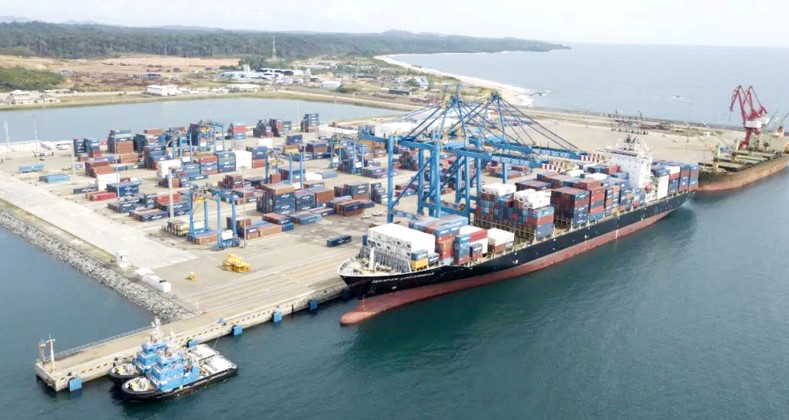
Project Name: Kribi Deep Sea Port Phase I Project -Cameroon
Host Country: Republic of Cameroon
Project Duration: June 2011 – June 2014
Project specification :
As the company's first large-scale EPC framework project in Cameroon, the Kribi Deep Sea Port Phase I Project, Cameroon obtained 85% of the funds from the double preferential loans of the China EXIM Bank and 15% as the supporting funds from the state of Cameroon. The project consists mainly of the design and construction of a 40000 DWT multi-purpose berth and a 50000 DWT container berth, a 1355m long water-break, dredging of port basin and channel, storage yard (land), port equipments, supporting facilities, and auxiliary buildings. The contract amount is worth 498 million US dollars (after changed to 568 million US dollars), and the contract period is 36 months. The project commenced on June 10th, 2011, and completed and accepted on schedule on June 10th, 2014. The project has achieved good economic and social benefits and winning the 2016-2017 Chinese National Quality Engineering Award.
On September 1st, 2014, a consortium formed with the CHEC, France Bolloré, and France CMA-CGM were formally granted the 25-year franchise right of container berth of the Kribi Deep Sea Port and officially put into operation in March 2018.
Characteristics and Significance of the Project:
As the first large-scale deep-sea port in Cameroon, the history of no deep-sea port in Cameroon ended after the Kribi Deep Sea Port Phase I Project - Cameroon was completed and put into operation, improving the shipping layout and infrastructure conditions in Cameroon. The port radiates Cameroon and some landlocked countries in Central Africa, providing important access to the sea for landlocked countries, promoting and driving the social and economic development of Cameroon and Central African countries, and becoming the largest container transit port and comprehensive hub port in Central Africa.
During the project, the CHEC overcame many challenges, such as dilapidated infrastructure, a long rainy season, and a high incidence of malaria and typhoid fever. CHEC adhered to localization through scientific management reasonable arrangement of construction, employing and training many local workers, which not only promoted local employment but also improved the labor skills of local workers. CHEC actively participated in l public social welfare, , drilled wells for the local communities, and maintained local public facilities many times. This established a good reputation and image, for the Chinese enterprises. Thus completing the project, and achieving a good harvest of economic and social benefits, unanimously praised by the international partners, the government of Cameroon and society.
The completion of the project has brought about the demand for transportation infrastructure such as logistics park infrastructure and expressway behind the port and brought opportunities for the CHEC to develop deeply the Cameroon market and the markets of surrounding countries. In the later stage, the CHEC successfully signed the contracts for the port dredging Expressway phase I project and the Kribi Deep Sea Port Phase II project and signed the Kribi Port Cooperation Operation Agreement to participate in the port investment and operation, laying a foundation for the CHEC to expand and strengthen the Cameroon market and realize the coordinated development of EPC general contracting and investment and operation.
The is the first large-scale deep-sea port project in Cameroon fully adopting Chinese standards. The completion of the project has played a role in the promotion and demonstration of the promotion of Chinese standards. This paves the way for the adoption of Chinese standards in subsequent projects, promoting the export of domestic materials and equipment, and contributing to the implementation of the national "Going global" strategy and the "the Belt and Road initiative".
The opening and operation of the container terminal of the Kribi Deep Sea Port have brought new opportunities for the economic development of Cameroon and its Kribi maritime metropolis. Thus, helping to promote the transformation and upgrading of the CHEC from "industrial" to "commercial", and a model project for Sino-French cooperation in developing the third country market.
New Container and Oil Terminals Project -Walvis Bay, Namibia
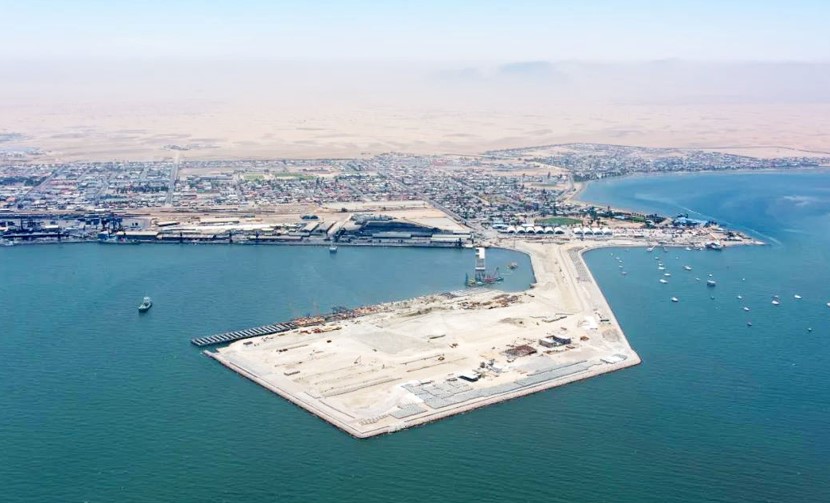
Project Name: New Container and Oil Terminals Project -Walvis Bay, Namibia
Host Country: The Republic of Namibia
Project Duration: May 2014 – August 2019
Project specification:
In October 2013, the CHEC won the spot exchange EPC full meaning? project of Walvis Bay New Container Terminal through fierce international bidding and the project is located in the old port area of Walvis Bay in Namibia The project construction consists of a container terminal that can dock 100000 tons of 8000 TEUs and has a coastline length of 600m, a 372m long cruise terminal, a 410000 m2 land storage yard (including 3.6 million m3 of dredging and 2.7 million m3 of reclamation). The project further consists of a floating water-break for yachts, and corresponding supporting facilities such as railways, highways, hydropower, communication, and housing construction, and 4 shore bridges.
As well, in October 2014, the CHEC won the spot exchange EPC project of Walvis Bay Oil Terminal bidding and the project is located in the new port area north of Walvis Bay. The project consists of two 60000 DWT oil tanker berths and two 400 DWT tugboat berths, 730m of the quay, 1700m of approach bridge, 8.9 million m3 of dredging, 7.6 km of water and land oil pipelines, including a total of 75000 m3 of oil storage area for diesel, gasoline, aviation kerosene, and heavy oil and other supporting facilities. The oil depot area is located in the oil and gas industrial zone on the northeast side of Walvis Bay, with an area of 2.6 hectares, which is functionally divided into a tank farm, vehicle, train loading and unloading area, production auxiliary area, etc.
Characteristics and Significance of the Project:
Namibia is located in Southwest Africa, with a land area of 820000 sq. km, a population of 2.5 million, and a coastline of 1600 km. The whole coastline is the world's oldest desert - the Namib Desert. Namibia, also one of the youngest countries in the world, was founded in 1990. The pillars of the national economy are mining, fishery, agriculture, animal husbandry, and tourism. Namibia has relatively complete infrastructure, but most of them are left over from the colonial period before the founding of Namibia and tends to be old. Walvis Bay Port is located on the west coast of the Atlantic Ocean and is the largest port in Namibia and a tourist city.
Since 2005, Walvis Bay Port has been under new planning, not only the core logistics hub of Namibia, but also an important port in the whole southwest of Africa, an import and export hub of Botswana, Zambia, Zimbabwe, and other surrounding landlocked countries. Through the project construction, the annual throughput of the container terminal of Walvis Port will increase from 300000 TEUs to 700000 TEUs, and the loading and unloading efficiency will achieve a qualitative leap. The oil terminal will also become the first national strategic oil storage facility owned by the Namibian government, and the storage time will increase from 15 days to 30 days.
The project has three technical challenges as follows:
1)The geological conditions are complex, and the underwater mud bed contains 20m thick diatomite with strong compressibility, which is extremely rare in international engineering industry. The project found a feasible solution through technology and design breakthroughs.
2)The mud layer contains highly toxic hydrogen sulfide gas, and serious safety risk . The project department has effectively controlled the threat of hydrogen sulfide by strengthening the safety operation regulations, optimizing the ship engine transformation scheme, allocating international management resources and various detection and protection facilities, and establishing a linkage mechanism with the owner and the community.
3)Walvis Bay is the second most severely corroded area in the world. The concrete structure of the project, especially the oil terminal, pipeline, and equipment related to the process in the reservoir area in the oil terminal project, has high requirements for corrosion protection.
As Namibia is the first country to write environmental protection into its constitution and is one of the best countries in Africa to protect the original ecology and environment, the Walvis Bay with many tourism resources and an oyster breeding base nearby, the task of environmental protection is important. The project department worked hard on the construction process first, and entrusts professional institutions to carry out 24-hour detection of water quality and noise. The project also cooperates with local cooperative institutions to study the impact of operation activities on dolphins and with international non-profit organizations to carry out wildlife protection publicity in the project. Despite Namibia's safety management standards being very high, the container terminal project has achieved 5 million non-destructive safety working hours, which was praised by stakeholders of all walks of life. Also, despite the design and construction standards of the project adopting European, American, and South African specifications with strict requirements, the project department actively persuaded the owner to adopt Chinese standards in some aspects and promoted Chinese standards to go abroad.
The oil terminal project covers a variety of two-way oil receiving and dispatching processes for product oil terminals, terminal loading and unloading, pipelines, storage areas, and oil distribution, promoting the accumulation of experience for further development of the CHEC in the oil and gas industry.
Adhering to the CHEC's values of "perceived responsibility, high-quality return, and win-win cooperation", the project department actively realized its task of corporate social responsibility locally. As such, the project has created more than 2000 local jobs, trained more than 600 skilled workers through theoretical study, on-site practice, and on-the-job training for local employees, and also trained 70 employees through local qualified professional institutions. In the local area, CHEC has actively carried out donations to help students and help people in distress, with a total donation of 3 million Namibian dollars. Among them, it has sponsored two Namibian youths to study engineering at Hohai University in China for five years. It has also provided “practical opportunities” for local college students in the project and established a good image of Chinese enterprises in the local area
Dammam Port Container Terminal 2 Phase I Project -Saudi Arabia
Project Name: Dammam Port Container Terminal 2 Phase I Project -Saudi Arabia
Host Country: Kingdom of Saudi Arabia
Project Duration: July 2012 – March 2015
Project specification :
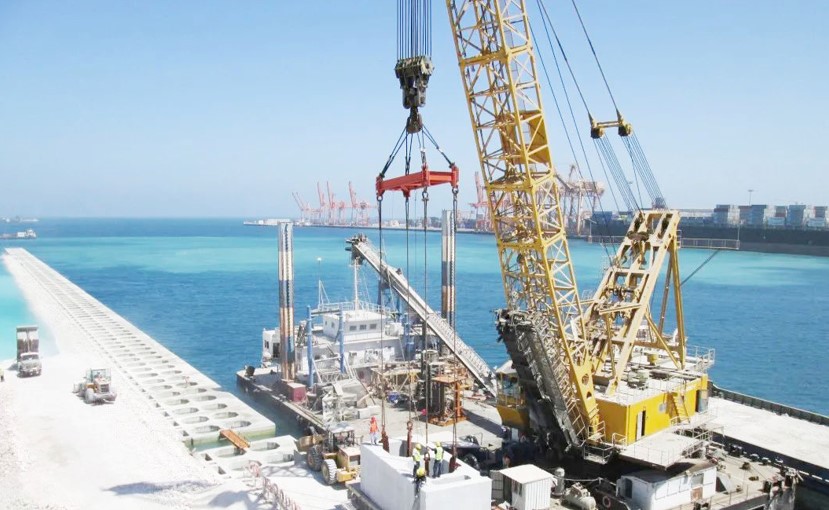
In 2012, the Singapore Ports Authority (PSA) and Saudi Arabia Public Investment Fund (PIF) jointly invested in the Container Terminal 2 project at King Abdulaziz Port, Dammam City, eastern province of Saudi Arabia. The CHEC won the bid in competition with many well-known deep-sea engineering contractors in the world.
The project consists of a 700m quay, an 800m revetment, a 450000 m2 container yard, a 25000m water and electricity pipe network system, and the construction of 18 buildings and facilities. After the completion of the project, it can berth 150000 TEUs of super Panamanian ships and achieve the annual throughput of 900000 TEUs. The project is an EPC contract project with a contract amount worth 180 million US dollars. The construction commenced in July 2012 and completed in March 2015. The project has been highly appraised and unanimously recognized by the owner during the construction process.
Characteristics and Significance of the Project:
Dammam Port of Saudi Arabia, a large commercial port located on the northeast coast of Saudi Arabia and close to the west side of the Persian Gulf, is not only the second largest port in Saudi Arabia but also one of the largest ports in the Persian Gulf. The throughput of the port has maintained a strong growth rate of two figures for many years. It is urgent to expand the port and improve the infrastructure to provide the throughput growth rate again. Against this background, a consortium led by the PSA won a 30-year project contract for the container terminal at Dammam Port in 2011. The PSA and Saudi Arabia Public Investment Fund established a joint venture company Saudi Global Ports in Saudi Arabia to develop, operate and manage the Dammam Port container terminal in Saudi Arabia.
In December 2018, the project won the "16th Tien-yow Jeme Civil Engineering Prize".
The first port infrastructure project of PSA in Saudi Arabia and the Arabian Gulf, aims to transform Dammam Port into the preferred berthing terminal for container shifts in the region, to support regional trade and commercial development. The completion of the project will increase the annual throughput of Dammam Port to 2.4 million TEUs, better meeting the rapid operation development needs of the port. Meanwhile, the terminal will transport goods to the inland areas through the port railway and expressway network, strongly supporting the growth of regional trade, meeting regional transport needs, and playing an important role in promoting the economic development of Saudi Arabia and its surrounding areas.
The first EPC project is jointly completed by the CHEC and PSA, one of the largest port operators in the world, and as the collaborator of CHEC. The completion of the project won the trust of PSA, expanded the influence of the CHEC, consolidated the CHEC's good reputation in the Saudi market, and laid a solid foundation for the subsequent successful development and operation in the Saudi market.
South Container Terminal; Port of Colombo -Sri Lanka
Project Name: South Container Terminal Project, Port of Colombo, Sri Lanka
Host Country: The Democratic Socialist Republic of Sri Lanka
Project Duration: December 2011 – April 2014
Project Specification:
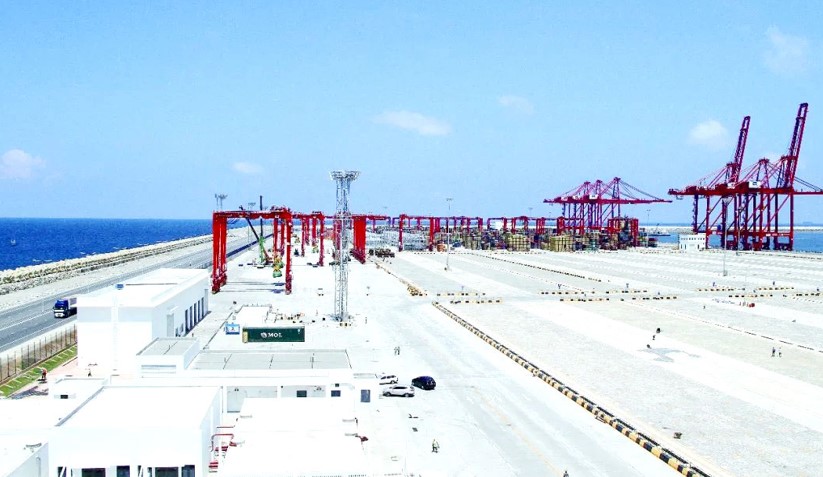
The project contract amount is 327 million U.S. dollars and owned by the Colombo International Container Wharf Company Limited. The construction scale is as follows: 3 large container berths, the coastline construction with a total length of 1200 meters, caisson-structure terminal, hydraulic structure designed for an E3-class container vessels with container capacity of berthed vessels of 18,000TEU; the container yard whose width is 439 meters and covers an area of about 640,000 square meters; dredging of the harbor basin water area with a surface area of about 2 million square meters and a dredging elevation of at least -18.0 meters. The designed throughput of the Terminal is 2.4 million TEU. The project commenced on December 16, 2011 and completed on April 10, 2014 on schedule.
Characteristics and Significance of the Project:
According to the preliminary planning of Sri Lanka as one of the important ports, the Port of Colombo bears the important task of driving Sri Lanka's development, restoring its former glory, and revitalizing its economy. The Port of Colombo will be based on port operations, make efforts to develop large-scale port-neighboring industrial zones, industrial parks and supporting areas for urban life.
The Port of Colombo is the only port in South Asia that can accommodate ships with a draft of 18 meters with the capacity to serve the Indian subcontinent, the Middle East and some countries in Africa due to its location, makes making it an important pivot of the 21st Century Maritime Silk Road.
In July, 2013, the first phase of the Terminal with 400m-long coastline was handed over to the owner five months earlier than the contract schedule, bringing huge economic benefits to the owner. The overall handover of the project was completed on April 10, 2014 and at present; the Terminal is running in good condition. Since its completion, the Terminal has received extensive attention from all parties, and has received dignitaries from all walks of life and news media. In the construction process, the project had entertained the owners of CHEC’s projects in other countries many times, providing powerful support for the inter-country collaboration. The on-time completion and good image of the project display the management and organizational capabilities of CHEC in EPC projects. The completion of the project has greatly improved the throughput capacity of the Port of Colombo and effectively facilitating the national economic development of Sri Lanka, giving it a "shining pearl" in the Indian Ocean.
The project won the 2016-2017 National Quality Engineering Award.
China-Myanmar Crude Oil Pipeline Project -China-Myanmar
Project Name: China-Myanmar Crude Oil Pipeline Project
Host Country: Republic of the Union of Myanmar
Project Duration: April 2011 – July 2015
Project specification:
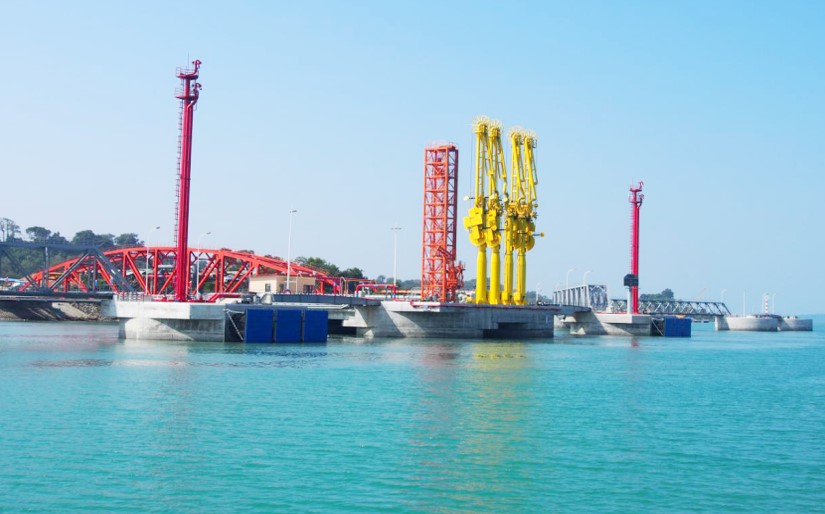
The China-Myanmar Crude Oil Pipeline is the fourth largest energy import channel after the Central Asia natural gas pipeline, the China-Russia crude oil pipeline, and the China-Kazakhstan oil pipeline. The completion of the China-Myanmar Crude Oil Pipeline will enable crude oil to be transported directly from Southwest China to the mainland via Myanmar without passing through the Malacca Strait. The Crude Oil Pipeline supporting wharf and channel project is a national energy strategic project and the starting point of the China-Myanmar Crude Oil Pipeline project, and highly valued by the governments of China and Myanmar. The construction of the project consists the design and construction of a 300000 DWT crude oil wharf, 38 km waterway dredging, Made Initial Station oil tank farm earthwork balance and ground treatment Project, and a large slope retaining project. The contract amount is worth 359 million US dollars.
Characteristics and Significance of the Project:
The Republic of the Union of Myanmar, located at latitude 9-28 degrees north and longitude 92-101 degrees east, is adjacent to the Andaman Sea in the southwest, India, and Bangladesh in the northwest, China in the northeast, and Thailand and Laos in the southeast. The main economic sources are agriculture, minerals, tourism, natural gas, rubber, and wood. The starting point of the China-Myanmar Crude Oil Pipeline is located at Madeira Island on the west coast of Myanmar, and the starting point of the natural gas pipeline is at Kyaukpyu Port, which also plays a positive role in improving Myanmar's infrastructure, increasing employment opportunities and the urbanization process along the pipeline.
The project has improved Myanmar's infrastructure, increasing employment opportunities and promoting the urbanization process along the pipeline. , This also drive the development of Myanmar's petrochemical industry, meeting Myanmar's domestic demand for energy (i.e. Myanmar needs to import a large amount of diesel and gasoline every year), driving the economic development along the pipeline, as well cs driving the overall economic development of Myanmar, and brings more benefits to the people of Myanmar. Also from another perspective, Myanmar's economic development will further strengthen its economic and trade cooperation with all its neighbors.
China and Myanmar are friendly neighbors linked with adjoining mountains and rivers and the traditional friendship between the two peoples goes back to ancient times. Since ancient times, the people of the two countries have been called "Paukphaw" (brother). The completion of the project is also a historical witness of the friendship between China and Myanmar. As there is no school on the Madeima island (the first station of the China Myanmar crude oil pipeline) despite the population nearly 4000 Islanders, the CHEC established a primary school for the local people, providing school supplies and invited teachers to teach 690 local children; also built Myanmar labor children's school for children of migrant workers on the island; A total of RMB 60000 yuan was donated to resume school for 21 local orphans. The project department also regularly provided daily necessities and assistance to 71 local elderly people. Due to Myanmar being a Buddhist country, the project department also renovated the local temples for free and regularly visits the monks to better integrate them into the local society.
Hong Kong International Airport, third runway, project -Hong Kong
Project Name: Hong Kong International Airport, third runway, project
Host Country: China
Project Duration: October 3rd, 2016- August 28th, 2022
Project Specification:
As a super project with large scale, high standard requirements, strong comprehensiveness, and high social concern, the third runway system project of the Hong Kong International Airport has a total investment of 141.5 billion HK dollars and is the largest infrastructure project in terms of investment since Hong Kong opened as a commercial port.
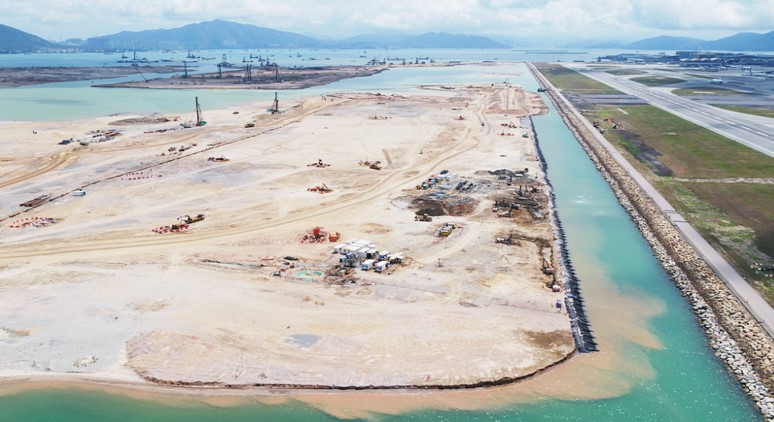
The project, with the contract amount of 23.29 billion HK dollars, and the reclamation area of about 6.5 million m2, and a backfilling volume of about 9500 m3, mainly consists of land formation, seawall construction, foundation treatment, monitoring, and detection instruments and equipment installation, and drainage system modification.
Characteristics and Significance of the Project:
Since its opening at Chek Lap Kok in 1998, the Hong Kong International Airport (HKIA) has been among the busiest airports in the world and has made significant contributions to maintaining Hong Kong's status as Asia's world city and as a leading international and regional aviation center. HKIA need to expand its runway system to maintain its competitiveness due to the saturation of the existing dual runway system and the fact that many airports in Asia are actively expanding their facilities.
The third runway system of the Hong Kong International Airport is of great importance to the future development of Hong Kong, it does not only helps consolidate Hong Kong's status as an international and regional aviation hub, promoting economic development, but also provide hundreds of thousands of job opportunities. The completion of the project will improve the saturation problem of the two existing runways and will be able to cope with an additional 30 million passengers per year, which ensures the airport's sufficient capacity. By 2030, HKIA will cope with about 100 million passengers per year and 900 metric tons of cargo per year, meeting the long-distance air traffic demand of Hong Kong; HKIA is of great significance to consolidate Hong Kong's position as an international air transport hub, enhance Hong Kong's overall competitiveness, and promote Hong Kong's social and economic development.
The third runway system of the Hong Kong International Airport has been highly valued by the state leaders, obtained special inspection by the Present Xi Jinping, while listening to reports and giving important instructions. The relevant ministries and commissions of the State Council, the Liaison Office of the CPC Central Committee, and the Hong Kong and Macao Affairs Office also paid high attention to the promotion of the project. In May 2019, the project was listed as a vital project in the “Outline Development Plan for the Guangdong-Hong Kong-Macao Greater Bay Area”
Jurong Shipyard in Singapore -Singapore
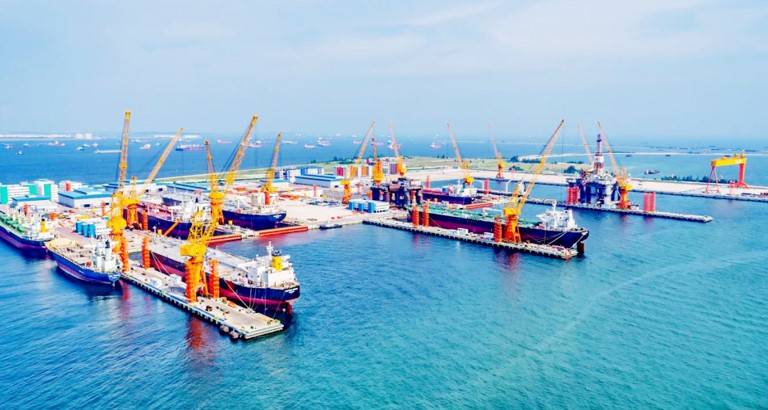
Project Name: Jurong Shipyard Project - Singapore
Host Country: Singapore
Project Duration: November 2009- December 2016
Project specification:
In 2009 and 2013, the CHEC won the bid for Phase I and Phase II of the new shipyards Projects of Tuas and Jurong in Singapore, with a total contract amount worth 550 million US dollars. The construction consists of the design and construction of seven nos. Dry docks, six nos. marginal quays, four nos. Quays, four nos. Jiers and three nos. 15000 TEUs Gantry Crane Foundations.
Characteristics and Significance of the Project:
As the first composite shipyard in Singapore, Jurong Shipyard is the world's first composite shipyard invested and constructed by the owner Sembcorp Marine, a vital project for Singapore to further enhance the competitiveness of its maritime business. The project cooperated t, with many other projects units to optimize large quantities of resource handling, tight construction periods, and high technical requirements schedules thus highly valued by the governments of China and Singapore. Phase I and Phase II of the project have won the highest award in China's Construction Industry, i.e. the Luban Award, and the national quality engineering award twice. The completed Jurong Shipyard got appraisals from the Singapore government as a "Future Shipyard", "Dream Shipyard" and "Model of New Era Shipyard".
New Container Terminal & Dredging Project in Sudan Port -Sudan
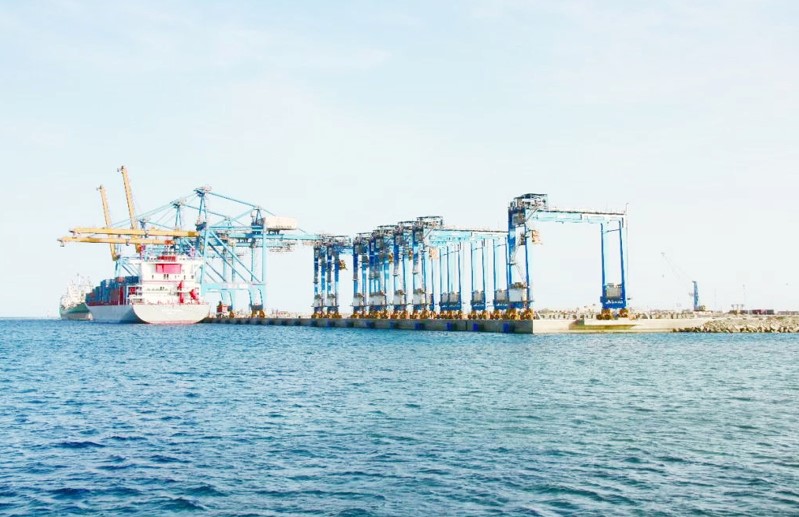
Project Name: New Container Terminal & Dredging Project in Sudan Port
Host Country: Sudan
Project Duration: January 2007- February 2011
Project Content:
The New Container Terminal & Dredging Project in Sudan Port includes 2 nos. 70,000TEU Container Terminal, terminal apron roads, revetment, dredging, and land reclamation, and a navigation and sightseeing lighthous.
Terminal: the construction length of the whole terminal structure is 861.84m, including 781m for the main terminal, 40.24m for the transition section at the southeast end, and 44.6m for the north end. The South revetment is 1332m long, the North revetment is 87.76m long (connecting the 44.6m-north end), and the road area is 34832.6m2. The terminal is designed as a gravity caisson structure, which is divided into upper and lower layers. A total of 4157 components are required to be prefabricated, including 486 caissons, 246 unloading plates, 446 gratings, and pipe trench covers and sleepers. The weight of each caisson is within 200t; The bottom of the caisson is a riprap of the foundation bed, with a thickness of 2-6m. The top of the caisson is a prefabricated unloading plate and parapet from concrete pouring; Dredged material (coral stone) is dumped and filled behind the caisson as a decompression prism and inverted filter; The rear track adopts a reinforced concrete structure.
Dredging: the total dredging volume is 7.65 million m3. The geology of the foundation trench and the harbor basin is coral reef geology, and the adopted technology is rotary drilling cutter-suction.
Characteristics and Significance of the Project:
1.The application of "Four-New Technology" in the project. It is situated in a desert area with high temperatures and large daily temperature differences, the project approves the mixing of polypropylene fiber into the concrete to prevent or reduce the occurrence of concrete shrinkage cracks. This approval can prevent or reduce the occurrence of shrinkage cracks due to water loss at the plastic stage of the concrete when the deformation modulus is low, and ameliorates the deformation characteristics and toughness of the concrete.
2.Our concrete construction faces a great deal of challenges due to the high temperature and big gap in temperature in Sudan, which is linked to the poor quality of local raw materials. The project department has controlled the concrete quality through raw material control, concrete mix proportion adjustments, polypropylene fiber addition, and other channels. Hence acquired a betterquality at the end of the whole project and the owner being highly praised.
3.Innovation of the project fund mode. The method of deferred payment is endorsed to solve the owner's problems in situations whereby the owner of Sudan Port is short of funds and urgently needs to carry out port construction. On one hand, the completion of the port berth on schedule has expanded the scale and enhanced the profitability of the owner; on the other hand, it has relieved the owner's short-term financial difficulties and strengthened the long-term cooperation between the two parties, thereby laying a foundation for a subsequent continuous contract of Sudan Port projects and a stable market in Sudan Port.
4.Promotion of the engineering application research of coral reef limestone. Based on the project, thorough research, theoretical analysis, indoor and field tests, calculation simulation, and other methods, is systematically carried out to research on the basic physical and mechanical properties of coral reef rock and soil. The effective detection of different reinforcement methods of coral reef rock and soil backfill in the container yard, the optimal design of pavement structure, the settlement characteristics and stability of the gravity structure foundation of the coral reef rock foundation, clarified the physical and mechanical properties of coral reefs in the Red Sea area, thus obtain the design parameters suitable for the red sea coral reef backfill foundation. The project successfully solves some key technical problems in engineering design and construction such as providing relevant design parameters and theoretical basis, saves the project from cost, and has good social and economic benefits.
5.All-round integrated services for the owner. According to the natural coastline of Sudan, the economic development of Sudan, the needs of the owner, and the long-term business layout of the company, merged with other services from financing, consulting, planning, design, construction, and equipment supply to the port operation have formed in the Sudan Port market.
6.The project won the 2010 Quality Engineering Award of CHEC.
7.The project is the largest port project with the most advanced port machinery supporting facilities in Sudan so far and the Berthing Capacity of the terminal increased to 70000 tons. A successful operation of the terminal is of great importance to the port logistics of Sudan and even the whole of northeast Africa, which has effectively increase the import and export trade volume of Sudan Port and is of great importance to the overall development of Sudan's national economy.
Saigon International Terminals - (SITV) Project -Vietnam
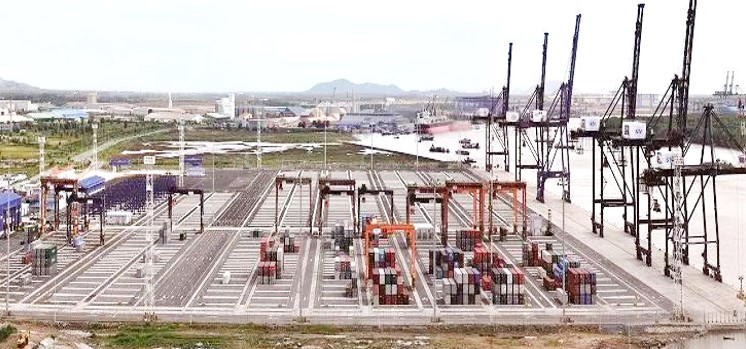
Project Name: Saigon International Terminals - (SITV) -Project
Host Country: Vietnam
Project Duration: December 31, 2007- November 1st, 2010
Project specification Content:
Saigon International Terminals -(SIT)Project Vietnam is located along the ThiVai River in Phu My Industrial Zone 1, Ba RiaVung Tau Province, Vietnam. This project is divided into 3 packages, including Package 1 Quay Deck, Dredging and Reclamation, Package 2 Pavement and Services Works, Package 3 Building Works and all the 3 packages are undertaken by CHEC. This project commenced on December 31st, 2007, completed successfully by CHEC in November 2011, and handed over to the Project owner 6 months ahead of schedule.
Characteristics and Significance of the Project:
As one of the large-scale inland river container terminals in southern Vietnam, the project is capable of berthing 80000 TEUs container ships. As part of an important port in southern Vietnam, it plays a very significant role in local logistics and shipping. The project is conducive in promoting the development of the local economy and plays a positive role in consolidating CHEC's position in the Vietnamese market.
Port Lobito in Angola -Angola
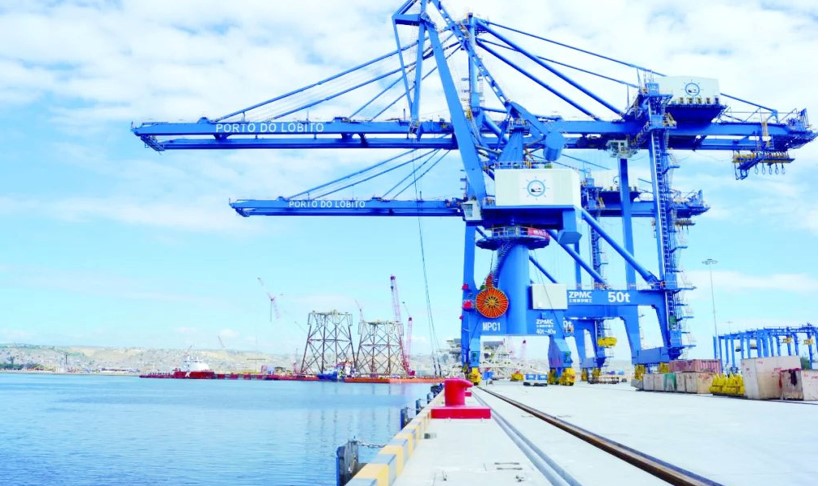
Project Name: Lobito Port Project -Angola
Host Country: Republic?of?Angola
Project Duration: June 2008- October 2013
Project specification:
In 2002, Angola ended its 27-year civil war and turned to economic construction. In 2004, China signed the first batch of cooperation agreements with the Angolan government to help Angola carry out infrastructure construction. In 2008, the CHEC won the bid for the Port Lobito project -Angola, consisting of a 414 m long container terminal and a 310 m long ore terminal, with a total contract amount worth 1.347 billion US dollars. The project overcame various difficulties due to the 2008 international financial crisis and was finally completed and put into operation in 2013, greatly promoting the economic recovery and development of Angola.
Characteristics and Significance of the Project:
Port Lobito, located in the mid-west coast of Angola and close to the southeast of the Atlantic Ocean, is one of the main ports in the south of Angola and a transit port for some materials from DR Congo former Zaire and Zambia, and material distribution center in southern Angola, for small and medium-sized industries such as food, cement, and sacks.
Due to war damage and long-term disrepair, all berths of Port Lobito have reached or even exceeded their service life, and the terminal equipments were damaged seriously. There is no large lifting equipment in the old Lobito Port, and the operation mainly depends on the “lifting equipments” on ships. Only one container can be loaded and unloaded every 20 minutes. Therefore, the expansion and restoration of the Lobito Port have become another key point for Angola's economic recovery and development.
The hinterland of the Lobito Port, landlocked countries such as Congo and Zambia, has become an important hub and cargo distribution center in southern Africa after its expansion, ie the ores from the landlocked countries are transported through the Lobito Port. The completion of the project has greatly improved the operating capacity of the Lobito Port. The port machine produced by Shanghai Zhenhua Company can load and unload five containers per minute, upgrading the throughput capacity of the Port to reach 70000 TEUs. , This is of great significance to the promotion of local economic development. Santos George, director of the Operation Department of Lobito Port Authority, said: "the port authority and the people of Lobito are very satisfied with the work of the CHEC and the Chinese people."
The Qasim Port Project-Pakistan

Project Name: The Qasim Port Project-Pakistan
Host Country: Pakistan
Project Duration: July 2008- December 2010
Project specification:
The The Qasim Port Project-Pakistan consists of design, construction and general contracting of the two projects i.e. Qasim Port International Container Terminal (QICT) (Phase II) and the Fertilizer Aliment Project (FAP). The project is located in the largest city of Karachi, , and the Qasim Port is the second largest port in Pakistan.
The construction of the QICT terminal project consists of a coastline length of 727m, a construction scale of two 100,000 DWT container berths, and a container yard of more than 100,000 m2, with a total investment worth 211 million US dollars. As the largest overseas investment project in Pakistan at that time, the construction commenced on July 16, 2008, completed and accepted on December 29, 2010. It is very innovative for the structural type of large-diameter steel pipe pile and steel sheet pile combination adopted by the project, which is rare in domestic and foreign projects at the time. With limited construction experience in similar projects at the time, the construction technology difficulties were enormous.
The construction scale of the FAP project is a 75000 DWT grain ship berth, with a total investment worth 64 million US dollars. The project mainly consist of a high pile beam plate structure quay of 300m in length, three mooring piers and the land formation, road storage yard, civil engineering and related supporting facilities behind. This project is the first specialized grain and fertilizer loading and unloading berth in Pakistan.
Characteristics and Significance of the Project:
As a landmark project in Pakistan, Qasim Port Project has created "first" records in Pakistan, such as the first special-purpose FAP terminal. The Qasim Port is also the second largest and busiest port, handling about 35% of Pakistan's cargo (about 17 million tons per year). The Qasim Port is located on the old channel of the Indus River, 35 km east of Karachi city center, with great geographic advantages as it is adjacent to the main air routes, providing favorable conditions for internal transportation. The Qasim Port is only 15 km away from the Pakistan expressway, 14 km away from the main national railway line, with 6 railway networks connected to the port terminal, and only 22 km away from Chennai International Airport.
During the construction process, CHEC adhered to the concept of altruism and win-win cooperation, respecting local laws and regulations, religious culture, and local employees, insisting on localized management, to enhance harmonious relations. Therefore, it has won the trust and praise of the local people, establishing deep brotherly friendships, and good image of Chinese enterprises.
Port Said Container Terminal Project -Egypt

Project Name: Port Said Container Terminal Project -Egypt
Host Country: Egypt
Project Duration: September 2008- May 2011
Project specification:
Suez Canal container terminal (SCCT), consisting of international shipping giant Maersk as the largest shareholder; proposes to construct the Port Said Container Terminal in three phases, with a service life of 40 years, which will be taken over by the Port Authority after the expiration. The owner's Engineer ( expert) of the project is the senior Dutch consulting company, Royal Haskoning. With CHEC undertaking a maritime engineering project in Egypt through EPC for the first time, with a contract amount worth 219 million US dollars. The contract commencement date is on September 27, 2008, and the completion date is on July 14, 2011, with the total construction period of 139 weeks. The project consists of the construction of 4 nos. 150000TEUs container terminal berths, including the dredging of the front water area and the U-turn dredging, the auxiliary facilities of the terminal, the land backfilling, and the foundation treatment within a total 1200 m-length of the quay coastline. The design adopts the combination structure of an ultra-deep pile foundation and a Super-deep "T" style diaphragm wall built on a soft foundation for the first time. The pile depth is more than 60 m, and the design water depth of the front is - 17.5 m (18.5 m is reserved for long-term dredging -). The design service life of the main structure of the terminal is 100 years and the maintenance period is 50 years. There is no similar successful experience at home and abroad for the design, construction, and management of the project, thus the design and construction difficulty is huge.
Characteristics and Significance of the Project:
The project is the first international bidding spot exchange EPC project implemented by the CHEC in Egypt under FIDIC contract conditions. The completion of the project has contributed to the local social stability and the improvement of people's livelihood and become a stabilizer for the smooth operation of the owner in the later period. The project was handed over to the owner seven weeks in advance on May 27, 2011. The comprehensive and successful performance of the project injected a strong impetus into the follow-up of the African market development and international spot exchange bidding projects and laying the foundation for in-depth cooperation with Maersk in the global field.
The "Core technology research on the design and construction of a new type Super-deep structure. "T" style diaphragm wall combination pile foundation terminal" of the project; won the 2011 first prize CWTCA National Science and technology progress award. The construction method of Super-deep "T" style diaphragm Wall, under soft geological conditions won the National Excellent Construction Method award. The project also won the first prize of the "National High-Quality Project" and the National Excellent Project Management Achievements of Construction Projects in 2012-2013; while the project design won the second prize of Excellent Design Achievements of National Engineering Construction Projects.
Ashdod Port Project -Israel

Project Name: Ashdod Port Project - Israel
Host Country: Israel
Project Duration: September 1st, 2014 – May 31st, 2021
Project specification:
In 2014, after years of repeated arguments the Israeli government officially invited tenders for the expansion projects of Ashdod port and Haifa port to the world. CHEC, relying on its abundant technical strength and quotation advantages, emerged from the traditional European and American infrastructure enterprises and won the first bid of the two projects. Finally, CHEC chose the Ashdod port project for implementation according to the bidding rules.
The project, with a contract amount of about 950 million US dollars, a construction period of 93 months, and the warranty period of 36 months, was mainly based on European and American technical standards and belongs to general construction contracting. The project consists of the construction of a 2.1km water-break, two 200000 DWT container terminal berths, two 60000 DWT terminal berths, dredging of about 8 million m3 of port basin and channel, backfilling of about 700000 m2 of land, and foundation treatment work such as about 24000 marine gravel piles and land vibration and substitution.
Characteristics and Significance of the Project:
Israel, inherently poor in natural resources, is highly dependent on foreign trade, where more than 90% of foreign trade depends on the shipping because its relatively isolated from the markets of surrounding Arab countries for a long time, due to political, religious, and other reasons. After the 2008 financial crisis, the Israeli government adopted a series of economic stimulus plans, including the development of an advanced transportation system as one of its important tasks. The old Ashdod port in its current operation has outdated facilities, insufficient berth capacity, and low efficiency of port operation, which makes its competitiveness in the Mediterranean area get lower and lower. After the completion of the project, it is expected that the annual container throughput will rise to 2.16 million TEUs, which will rewrite Israel's history of not having a deep-sea berth of more than - 17 meters. The port can be used for the berthing of Maersk "Triple-E" class container vessels and become an important transfer station for East-West trade, which is of great significance to improve Israel's people's lives, reduce prices, and promote local employment and socio-economic development.
The project, as a landmark infrastructure project of cooperation between China and Israel, is the first large-scale hydraulic infrastructure project undertaken by CHEC in developed countries. The success of this project will become the bridgehead of the CHEC in West Asia and Europe facilitating the entry into Europe, a milestone for Chinese enterprises to move from "Going abroad" to "Going up" i.e. entering the hydraulic engineering project market of developed countries in Europe and the United States.
Compared to other traditional port projects, the project has the following characteristics: First, the poor construction environment the construction area of the project, located in the open sea area of the name of the sea, is affected by medium and long-term swells, with the maximum wave in winter as high as 12m. Many traditional processes cannot be applied to the project, i.e. major technological innovation equipment such as jack-up offshore gravel pile construction platform. As such, to remedy the challenge, a hydraulic jacking pile driving platform came into being in the project to adapt to the local sea conditions, for the transformation of traditional offshore construction into "onshore construction" secondly deploying a long cycle, many nodes, and a large number of fines. As the original contract period of the project is 93 months, and 38 owner nodes, of which 23 nodes involve fines, with a maximum fine of 80000 US dollars per day, it is also a major challenge for the project team how to complete all the work node by node under the business plan and avoid breach of contract. Thirdly, the project is large in size, diverse in structural forms, high in adoption standards, and difficult to construct the organization. The project adopts European and American technical standards, with high construction standards, and the owner and consultant are Jews, good at the business, and have strict management. Moreover, the project also covers almost all common hydraulic structures, known as the "hydraulic Museum", consisting of three types of terminals (gravity terminal, high pile terminal, and sheet pile terminal), four types of foundation treatment (Marine gravel pile, land-based vibration, and substitution, surcharge preloading, plastic drainage board), the deep-sea water-break (the maximum construction water depth is 28m), which were highlighted in the project, and all processes are linked. Furthermore, , as the project construction cannot affect the normal operation of the old port, the construction organization is difficult.
Buildings
Business Development Project -Havelock City
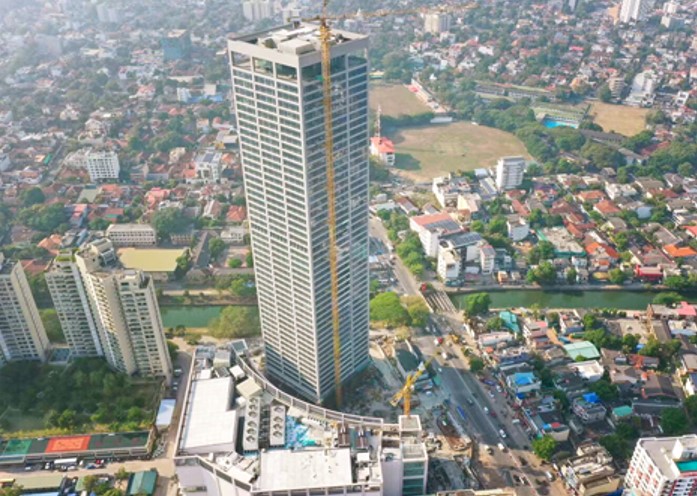
Project Name: Business Development Project -Havelock City -Sri Lanka
Host Country: Sri Lanka
Project Duration: March 28th, 2018 - May 30th, 2022
Project Content:
Located in the center of Colombo, the capital of Sri Lanka, this project will be a super-high and super-large intelligent complex building integrating leisure, shopping, entertainment and offices as a whole when completed, which will provide supporting facilities for the surrounding subsidiary projects. The project is mainly comprised of the foundation pit excavation and support, civil engineering covering building structures and masonry construction, as well as professional engineering as electromechanical engineering, fine decoration, curtain walls, and landscaping.
Characteristics and Significance of the Project:
The project is the tallest building built by CCCC overseas and it will be the tallest Malls and Offices Building project in Sri Lanka when completed. As another landmark building constructed by CHEC in Sri Lanka, it plays a huge role in building the “featured section” of CCCC’s housing construction, opening the housing construction market in Sri Lanka and creating overseas brand projects, and it has implemented the Group’s development strategy of “marching into the cities”.
Colombo Shangri-La Program -Sri Lanka
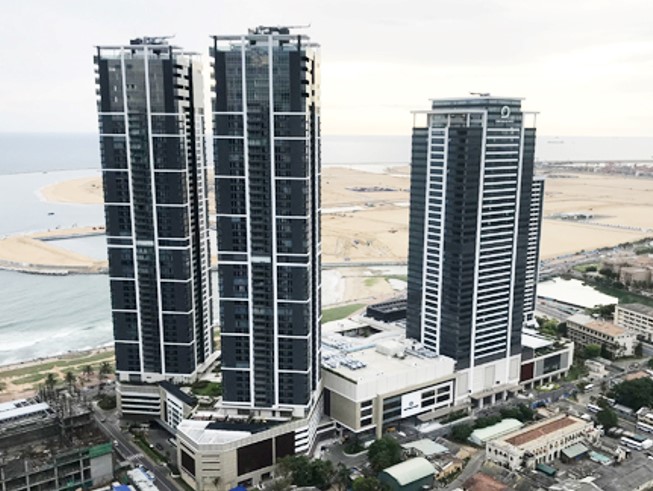
Project Name: Colombo Shangri-La Program Sri Lanka
Host Country: Sri Lanka
Project Duration: November 27th, 2014 - October 30th, 2019
Project specification:
Located at the CBD in the core of Colombo. This program covers Phase I Shangri-La Hotel Project, Phase II Twin Towers Apartment and Phase III Malls and Offices Building Project. It is mainly comprised of the foundation pit excavation and support, building structure, masonry construction, waterproofing work, decoration of back-of-house area, exterior wall construction and underground water and electricity embedding work, curtain walls of Phase I project as well as the management and coordination work of electromechanical engineering, curtain walls, fine decoration, elevators and other subcontracting works as designated by the owner.
Characteristics and Significance of the Project:
This is a strategic development project developed by the government of Sri Lanka with foreign investment. It is the first super high-rise building contracted by CCCC overseas (except Hong Kong, Macao and Taiwan), and also the largest and highest-end commercial complex building in Sri Lanka. It has won the Gold Award of CCCC High-Quality Project and Gold Award of Singapore Green Mark. It has also improved the level of supporting facilities for local tourism resources, promoted the development of local tourism, driven the upgrading of local consumption and tourism, and winning recognition from all walks of life. At the same time, with this reputation it won in Shangri-La Project in Sri Lanka, Sri Lanka Regional Company has set up the golden signboard of ZGCG and CCCC as a strong force in building high-rise buildings. Thus, it has successively won the bids for the Business Development Project of Havelock City in Sri Lanka (whose structure is of the same type with this program, and whose owner is also Singapore), Blue Mountain Twin Towers Apartment and Marina Square Port-surrounding Apartment Comprehensive Development Project, with the total amount of contracts in the housing construction field reaching nearly 500 million US dollars. They started the section of “featured real estate developer” of CCCC and established a good brand image of CCCC as a developer of featured super high-rise housings.
Hambantota International Airport Development Project -Sri Lanka

Project Name: Hambantota International Airport Development (HIA) Project -Sri Lanka
Host Country: Democratic Socialist Republic of Sri Lanka
Project Duration: March 2010- March 2013
Project Specification:
In 2009, the Sri Lankan government relied on preferential loans from the Export-Import Bank of China to invite bids for the construction of Hambantota International Airport. The CHEC won the project, signed the EPC contract, and undertook the project's design, construction and procurement.
This project consists of the construction of a runway of 3500m in length and 75m in width, which will be able to accommodate Airbus A380 Aircraft. A Stub Taxiway of 370m in length and 60m in width, and an Apron with 73000 m2 (10 parking positions) will be constructed. A Passenger Terminal Building of 10,000 m2, a Cargo building of 5,000 m2 and an Air traffic control tower of 35m in height will be built. Ancillary works including Meteorological Building, Fire Station, Water Station, Waste Treatment Plants, Flight Control Tower, 2 nos.
Sub-station, Sewage Treatment Plants, and a facilities supporting the operations of the airport, such as drainage system, sewage system, lighting system, electrical engineering, communication, and navigation system, roads, parking, etc. The contract amount is worth 209 million US dollars, which is the first overseas composite airport project independently contracted by the CHEC. During the construction, the Sri Lankan government attaches great importance to it. The construction commenced in March, 2010 and completed on schedule in March, 2013, achieving good economic and social benefits.
Characteristics and Significance of the Project:
Hambantota International Airport development project, located in Hambantota- a small city in the southeast of Sri Lanka, is the second International Airport in Sri Lanka. Before the construction of HIA, Colombo Bandaranaike Airport (BIA) was the only international airport in Sri Lanka. Once Colombo airport cannot be use due to weather and other reasons, all flights must divert to India, which is very unfavorable to the development of Sri Lanka's overall air transport and tourism industry. Also, HIA is an important part of the development plan of the Sri Lankan government to build Hambantota into a transportation hub in the Indian Ocean region. Therefore, the HIA development project has attracted the attention of all walks of life in Sri Lanka since its inception.
Hambantota, located in the southern province of Sri Lanka, is one of the less developed provinces in Sri Lanka, with a high unemployment rate and low living standard. However, the province has good development prospects because of it is rich land resources and lower labor prices. The Sri Lankan government has expressed its strong desire to improve the social and economic conditions of the southern province and will introduce preferential policies for the economic and social development of the southern province. Hambantota region, listed as one of the major economic development regions by the government under such background, had put forward the "Great Hambantota Development Plan". Some projects were launched and made certain in progress, i.e. some ports, international conference centers, highways, tourism facilities, energy, and other projects.
The completion of Hambantota International Airport has greatly relieved the pressure on people and logistics flow in BIA, also promoted the development of the economy and tourism in the southern provinces of Sri-Lanka. The project won the Luban Award of China Construction Engineering in 2014-2015.
Juba International Airport, Project -South Sudan

Project Name: Juba International Airport Project -South Sudan
Host Country: South Sudan
Project Duration: March 2014 – March 2017
Project Specification:
On June 20th, 2012, the CHEC signed the EPC full meaning of EPC contract for the Juba International Airport Project in South Sudan with the Ministry of transportation of South Sudan, with a contract amount worth 158 million US dollars. The construction commenced on March 24th, 2014, and completed the overall handover on March 17, 2017.
Construction description : this entails upgrading the technical indicators of the airport flight area from 4C to 4D, and design the aircraft type B767-200; upgrading the original runway, repair the original 2400m runway, add a 2 × 7.5-meters-wide shoulder, and runway extension by 700 meters. It also includes building a new vertical connecting track, repairing the two vertical connecting tracks and r the parallel taxiways, repairing the cargo apron plus pavement. The project work further include repairing the new service channel and passenger parking lot, re-form the drainage system and upgrade the navigation lighting and navigation system. Finally, to decorate the air traffic control tower, fire station, and generator room, the newly built lighting substation and equipment room, and upgrading of the airport fence, etc.
Characteristics and Significance of the Project:
1、Construction without suspension
As the rainy season in Juba for half a year, many aircraft of various types from international organizations such as the United Nations and other non-governmental organizations took off and land frequently in Juba International Airport in addition to civil aircraft taking off and landing more than 200 times a day, most of the construction can only be carried out at night. With less than 10 hours of each construction time, and the short effective operation time, the guarantee of normal operation of the airport the next day must be assured, which must be in line with high technical requirements and great responsibility for safety and security.
2、The original airfield area pavement was damaged seriously
The airport has been in disrepair for a long time due to war and other reasons. The original airfield area pavement is seriously damaged, with many cracks, block cracks, and ruts on the runway. Such a runway needs to be closed in due to great potential safety hazards.
3、Political unrest and Incessant war in South Sudan
In July 2016, civil war broke out again in Juba, the capital of South Sudan. All Chinese employees of the project department were forced to evacuate from South Sudan to ensure the life safety of employees. As a result, the project was forced to suspend work for more than three months, further increasing the difficulties and risks of the project.
4、 Innovative use of local unique laterite gravel
Although South Sudan is rich in a kind of laterite gravel, it has never been used in the airport airfield area. However, it is boldly applied to the pavement of the airport airfield area by carrying out scientific tests, detection, and monitoring under Chinese standards. Compared with the graded crushed stone of $50 / m3, its cost is only $15 / m3, which directly saves the project cost of 3 million US dollars.
5、The output of Chinese standards
The project was designed and constructed under Chinese standards. However, since there is no English version of Chinese civil aviation standards and foreign consultants are unfamiliar with Chinese standards, the construction process of the project faced great difficulties and took three measures: (1) English translation of relevant civil aviation standards. (2) Comparative research between Chinese standards and British and American standards. (3,) The explanation of the similarities and differences between Chinese and British standards to consultants on important parameters.
By the output of Chinese standards, the CHEC has gained the initiative in the construction of the project and made active and effective exploration for Chinese standards to go global.
The construction of the project has solved many problems of upgrading and reconstruction of the airport under the condition of non-suspension construction. It also accumulated engineering practice experience, which can provide a valuable reference for similar projects in the future and is of far-reaching significance. When the Juba International Airport became a truly modern international airport, the president and vice president of South Sudan praised highly of the project. The project overcame many difficulties such as the outbreak of civil war in South Sudan and completed various construction tasks, winning praise for the motherland and the CHEC.
The project also won more than ten honors, including CHEC's high-quality project, CCCC's high-quality project, and CCCC's science and technology
Macau Grand Lisboa Hotel -Macao
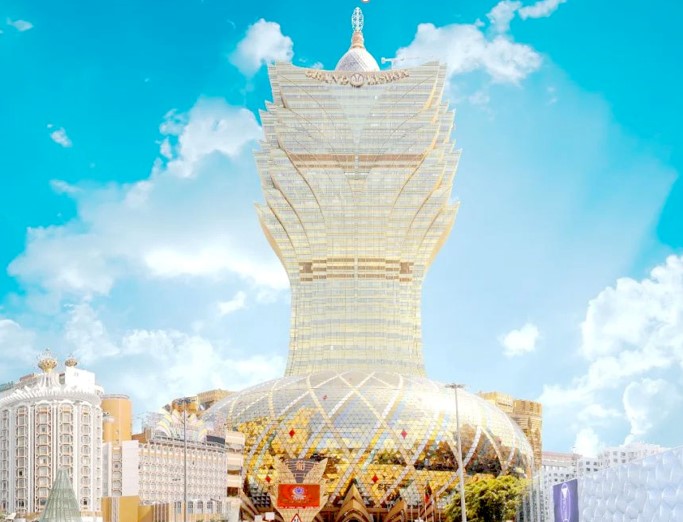
Project Name: Macau Grand Lisboa Hotel
Host Country: Macao SAR China
Project Duration: September, 2004 – September, 2008
Project Specification:
The second highest landmark building in Macao is Macau Grand Lisboa Hotel which is situated at the center of the most prosperous business district in Macao, with the total area of construction project, aproximately 170000m2 (228m high, a 4-basement with48-floor building which has covering an area of 13000 m2). Its external structure is quite unique, such as the golden lotus in full bloom. The project is divided into two sections: the foundation and the building construction, which constitutes the core tower foundation, the podium, and the bored pile foundation below the basement(the construction of basement, podium, and tower). The basement is poured through by the "Top-down method". The core tube below the ground floor of the tower adopts the "Partial steel sheet pile support open cut method" and the surrounding basements are constructed at the same time to connect with the steel structure of the podium in time.
Characteristics and Significance of the Project:
The Macau Grand Lisboa Hotel built by Zhenhua Macao is an architectural legend in Macao. As it is unique in appearance and has a structure of high requirements in architectural technology, the project demands that the building structure be complete in stages as soon as possible to speed up the progress of decoration and electromechanical installation.
Incase of difficulties and challenges, the project can be enhance through the process of technical analysis as well as the overall planning on the project construction management. The "partial steel sheet pile support open cut method" of the core tube and the "top-down method" of the (podium building and basement structure) are closely interspersed. The operation layout is adjusted in time, and the coordination management is strengthened on the project sections, thus successfully overcoming many difficulties such as poor construction space environment and multi-layer crossing of processes, which took years to perform the contract on time, with quality and quantity guaranteed. The owner was globally recognized and received extensive praise from the society, and in addition won the title of "Gold Award of steel structure in Hong Kong and Macao SAR".
The completion of the Macau Grand Lisboa Hotel has profoundly affected the development of Macao's architectural style since then and has helped Macao become famous in the world and become a symbol of Macao's prosperity because of its exquisitness and bright posture.